
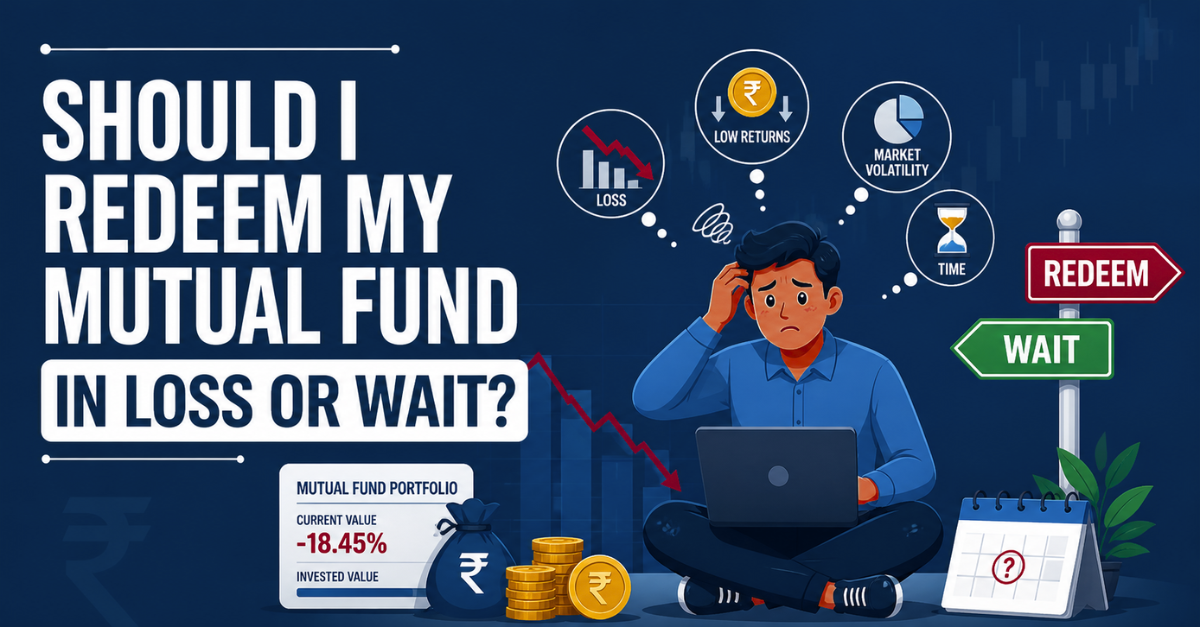
Investing in mutual funds is one of the most effective ways to build wealth over the long term. However, new investors often face emotional challenges, especially when their investments show losses in the initial stages of their investment journey.
A common question among investors is: “Should I redeem my mutual funds at a loss or should I wait?” or many more questions running in every investor’s mind when their portfolio is declining, when the economy is struggling, and when markets are crashing worldwide.
This guide aims to explain why initial losses are normal, how to think like a professional investor, and how to make informed decisions during market fluctuations.
Understanding Why Mutual Funds Returns May Appear Low Initially?
Most investors begin investing in mutual funds with high expectations, anticipating immediate gains. However, in reality, returns may appear low in the first year or two, and there are several reasons for this:
Market Cycles and Economic Uncertainty: Equity markets never move in a straight line. Daily fluctuations, economic events, interest rate changes, global conflicts, and poor GDP growth all impact the fund’s Net Asset Value (NAV). These short-term fluctuations can make investments appear stagnant or even negative, even if the underlying assets are performing well. These uncertain times sound simple in theory, but have a profound impact on an investor’s psyche.
Impact of Expense Ratios: Mutual funds charge management fees, fund expenses, and operational costs. These tend to reduce the net returns slightly in the initial years. Over time, as the portfolio grows, the impact of these fees diminishes.
Unrealistic Expectations: Many new investors compare current returns to long-term historical performance data. No fund or stock guarantees future returns based on past performance. Remember that historical returns include periods of growth, recovery from recessions, and favourable market cycles. It is unrealistic to expect to make money immediately. It simply doesn’t work that way in the market.
Understanding these factors is the first step towards developing a sound investment mindset. Knowing that initial losses are common reduces anxiety and prevents hasty decisions.
Some common emotional challenges every investor faces
During times of loss, several psychological factors influence investor behaviour:
Fear of loss: The first reaction is panic. Due to uncertainty, when an investor’s portfolio crashes, many investors withdraw their funds to avoid significant losses.
Comparison with peers: Sometimes, seeing other investors’ portfolios make profits can cause investors to doubt themselves.
FOMO (fear of missing out) and impulsive actions: The fear of missing out on opportunities elsewhere forces investors to make hasty decisions. Remember, “A missed opportunity is not the only opportunity in the market.”
Guilt and regret: Some investors starts questing himselfs about their choice of fund or investment strategy and start believing that they are bad investors. Always remember, even though all big investors make bad decisions, no one can predict the market.
It’s important to understand that professional investors also experience fear and doubt, but the difference lies in following a structured decision-making process rather than acting emotionally.
Always Remember Some Facts About Markets
Let’s look at some Historical examples of the biggest market crashes:
The 2008 Global Financial Crisis,
The Sensex fell from around 21,206 to around 8,160—a decline of nearly 60% from peak to bottom.
The Nifty fell by approximately 50–55% from its 2008 high.
This wasn’t just a small correction—it was a massive crash caused by global banking failures and a recession in the broader economy. Some data shows that it took major indexes approximately 2.5–3 years to reach their previous peaks, and for many investors, it took even longer to set new highs.
2020 COVID-19 Crash
The Sensex fell by approximately 38–39% in a matter of weeks as fear of lockdowns spread.
The Nifty also saw a decline of approximately 30–38% from its January 2020 high.
By the end of 2020, roughly 8 months later, the Sensex had recovered to pre-crash levels and even surpassed them.
Some Important Lessons
In both scenarios/crashes, most equity fund investors saw their investments decline by 30-45%. But the market eventually recovered. Yes, many individual companies went bankrupt during this time, but you were invested in a basket of stocks, which means in a mutual funds, not in a single Company.
If you have diversified your portfolio between equity, debt, and hybrid mutual funds, then due to diversification, the value of your portfolio remains safe during a recession.
If you do rupee cost averaging (like SIP), it means buying more units during a recession when prices are low – this gives you the benefit of recovery later.
Average Up/Down: Should You Invest More?
A common question is, “Should I average up or average down my investment?” Here’s a practical approach:
Average Down (Invest more when price drops): This can reduce the average purchase cost, but it only works if the fund or stock has strong fundamentals and a long-term growth trajectory. Blindly averaging down without analysing the quality of the investment instrument may amplify huge losses. After doing strong fundamental analysis, allocate your capital in any investment vehicle.
Solution for beginners: Focus on consistency through SIPs. Avoid panic investing or over-investing during volatility. Review investment logic instead of trying to time the market.
Redeem or Wait: Professional vs. Retail Thinking.
Many investors ask, “Should I redeem a mutual funds at a loss or wait for it to bounce back?” or “If professionals invest, why would they be okay with losses?”
Listen, if you don’t need the invested money in the short term and your vision is long-term wealth creation, the answer is simple: “Don’t sell at a loss.” A loss on a portfolio represents an unrealised loss. When you sell securities, you book a loss. Therefore, if you analyse your fund and believe in its performance, don’t sell at a loss. Don’t make any emotional decisions.
Professional investors follow a process-driven approach. They invest based on research, long-term goals, and risk management. Temporary drawdowns are not feared because the strategy takes market fluctuations into account.
In contrast, retail investors often react emotionally. They lack a long-term perspective and may redeem funds prematurely.
Note: Being cautious doesn’t make you a bad investor. Avoid making rash decisions and follow these guidelines.
SIP and lump sum with Long-Term Discipline
When the markets are down, do not stop your SIPs or redeem your mutual funds; it’s like a counterproductive move. While it can be an option if you need funds urgently, as an investment strategy, it seems more damaging than limiting the damage.
SIPs are designed to help the investor benefit from market volatility. Since you invest a fixed amount in a mutual funds at regular intervals, you get more units when the markets are down and fewer when they are up.
In the case of lump-sum investing, do not sell your mutual fund if you have more money during the crash; invest in the mutual fund.
SIP and lump sum with Long-Term Discipline
When the markets are down, do not stop your SIPs or redeem your mutual funds; it’s like a counterproductive move. While it can be an option if you need funds urgently, as an investment strategy, it seems more damaging than limiting the damage.
SIPs are designed to help the investor benefit from market volatility. Since you invest a fixed amount in a mutual fund at regular intervals, you get more units when the markets are down and fewer when they are up.
In the case of lump-sum investing, do not sell your mutual fund if you have more money during the crash; invest in the mutual fund.
Discipline and consistency are more important than trying to predict market highs or lows.
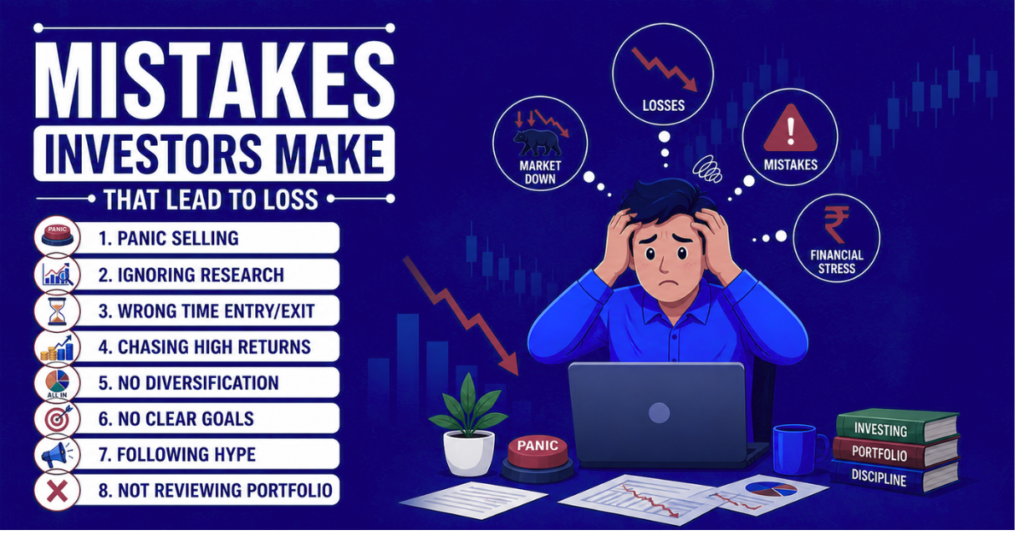
Avoid these common mistakes as a long-term investor.
Redeeming funds/units based on fear rather than logic
Many investors redeem mutual funds as soon as they see a loss, without understanding why. Market volatility is normal, and exiting out of fear often makes temporary losses permanent.
Switching from one fund to another without research
Switching from one fund to another simply because returns appear poor can be detrimental. Frequent switching without analyzing fund quality, investment style, and market cycles typically leads to poor long-term results.
Trying to time the market during fluctuations
Markets move in unpredictable ways in the short term. Investors who try to exit at the bottom and re-enter at the top often miss the recovery, reducing overall returns.
Comparing Your Portfolio to Others
Every investor has different goals, time horizons, and risk appetites. Comparing your returns to friends’ or social media posts creates unnecessary pressure and leads to poor decisions. Even if you follow the biggest investors, you can’t be like them.
Ignoring Your True Investment Goal
Mutual funds are selected based on specific goals, such as retirement or long-term wealth creation. Ignoring the true purpose and reacting to short-term performance can sabotage your investment plan.
Avoiding these mistakes helps investors stay disciplined and achieve long-term wealth creation.
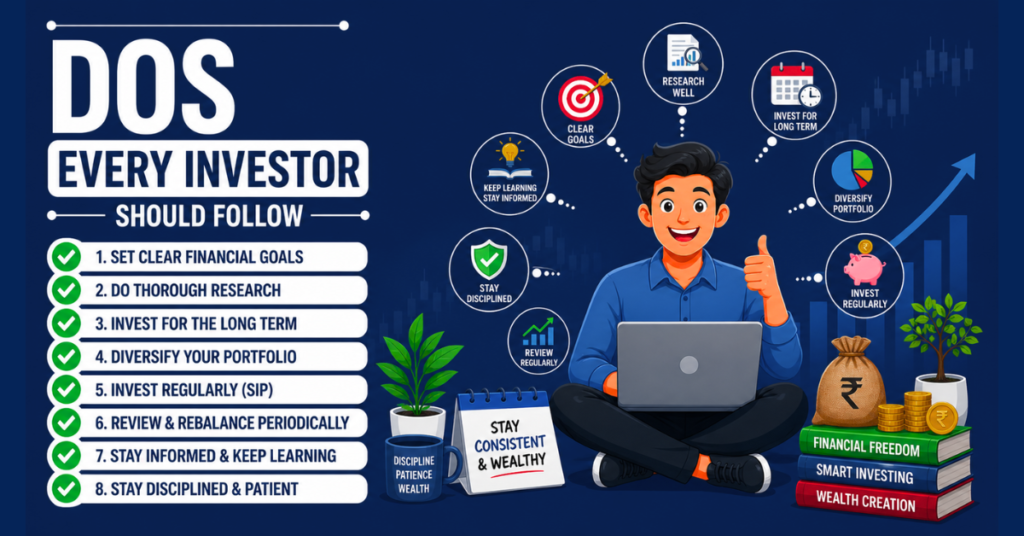
Investor Solution: What You Can Do During a Crash
Stay Calm
Short-term losses are a normal part of equity investing (when you sell, then the loss is booked). Markets often fluctuate, but decisions made in panic during temporary declines usually harm long-term returns. Avoid making any emotional decisions at this time.
Check the Fundamentals
Before making any decisions, review whether the fund’s strategy, portfolio quality, and management are strong. If the fundamentals are sound, temporary losses are not a reason to exit.
Maintain a Long-Term View
Short-term market declines have little impact on goals longer than five years. Time spent in the market matters more than short-term performance.
Continue SIPs
Continuing SIPs during market declines helps investors purchase more units at lower prices. Over time, this improves cost averaging and supports strong returns from recoveries.
Review, Don’t React
Investors should periodically review their investments using logic and data, not emotion. Reacting without thinking during fluctuations often leads to missed opportunities.
Use Tax Rules Wisely
Losses incurred in other investments can be offset against capital gains. Understanding tax rules helps investors make smarter and more informed financial decisions.
The Conclusion
When mutual fund investments go into loss, investors react emotionally and make quick emotional decisions like redeeming mutual funds at the wrong time. However, successful investing is not about reacting to short-term market movements, but about staying patient and disciplined. Avoiding common mistakes like panic selling, chasing high returns, or ignoring proper research can protect your wealth in the long run.
At the same time, following the right approach makes a huge difference. Setting clear financial goals, investing regularly, diversifying your portfolio, and focusing on long-term growth helps you build strong financial stability. Markets will always fluctuate, but a calm and informed investor is more likely to succeed.
In simple words, losses are a part of the journey, not the end of it. The key is to stay consistent, think long-term, and make decisions based on logic rather than emotions.
This article is for educational purposes only and does not constitute financial advice. Don’t invest in any asset based on tips. Consult a SEBI-registered financial advisor before making any investment decisions. All return figures are indicative and based on market conditions as of May 2026.
Unity Wealth Capital

My name is Prabhat Mehta, and I’m from Jharkhand, India. I’m a CFA Level 1 candidate and currently pursuing a Bachelor of Commerce (B.Com) with a specific academic focus on financial analysis, corporate finance, and investment fundamentals.
I have a passion for studying and analysing financial markets, company valuation, and fundamental analysis. I feel immense joy and energy whenever I engage in these activities. I write articles to explain complex financial concepts simply and clearly, providing practical explanations to help investors avoid common mistakes and make better financial decisions.
Most retail investors struggle not because of a lack of funds, but because of a lack of clear financial understanding—they don’t know what investing is, how to get started, or how to select undervalued stocks with good growth potential. My work is to focus on solving those problems.
Investing isn’t just about investing in a single asset. I believe investing should be logical, disciplined, and knowledge-driven rather than emotional. Through continuous learning and real-world analysis, my aim is to foster sound financial thinking and share information that truly helps investors grow with confidence over time.